
You verify an SMC shower pan supplier with documents, not impressions. Five checks separate a factory that moulds its own pans from a trading desk reselling someone else’s: original spec sheets and model drawings for the exact models you are buying, container loading data the supplier can explain model by model, certifications you can independently check — for this product category, CE, ISO 9001 and anti-slip Class C (DIN 51097) — a live or recorded walk through the moulding floor, and shipment records that match the story you are being told. A genuine factory produces all five without drama, because it already has them for its own production. A reseller stalls on exactly the items that require owning a mould.
By the SMC Shower Engineering Team · Last updated: November 2026
What documents should a real SMC factory be able to send?
Start with the paper that production itself runs on. Ask for the original spec sheet and the model drawing for each model code you intend to order — the drawing with dimensions, drain position and revision date, not a marketing PDF of the series. A factory works from these files daily, so sending them is a two-minute task. What you receive tells you plenty: drawings that match the quoted models, carry revision dates and agree with the spec sheet describe a controlled production process. A supplier who can only send catalogue pages and photographs is showing you the limit of what they actually hold. Cross-check the documents against each other — the drain position on the drawing should match the installation data the supplier gives your installers, and the model codes on the spec sheet should be the model codes on your quotation, character for character.
Why does container loading data expose weak suppliers?
Loading data is the question resellers dread, because it can only be answered by someone who has physically stacked the product. Ask how many units of your model load into a container, how they are packed and stacked, and what the packed weight and volume per unit are — then ask the same question about a second model. A factory answers from packing records and can show loading photos of real shipments. The answers also do practical work for you: they let you cost freight per unit accurately, plan warehouse intake, and spot the suppliers whose freight quotes are guesses. Vague answers — a round number with no packing description — mean the person quoting has never watched your product being loaded.
| Verification check | What to ask for | What a pass looks like | Red flag |
|---|---|---|---|
| Spec sheets and model drawings | Original spec sheet and dimensioned model drawing per model code, with revision date | Documents match the quoted models and agree with each other | Only catalogue pages and photos; model codes that do not match the quote |
| Container loading data | Units per container, packing method, packed weight and volume for your models | Specific numbers with a packing description and loading photos | Round guesses; cannot explain how the pans stack or are protected |
| Certifications | CE, ISO 9001 and anti-slip Class C (DIN 51097) documentation for the product and factory | Documents name the factory and product, and can be checked with the issuing body | Certificates in another company’s name; long lists of unverifiable marks |
| Factory evidence | Live video call from the moulding floor, or unedited workshop footage showing presses and your product type in production | Presses, moulds, work in progress and finished pans of the type you are buying | Only a showroom and an office; footage that could be any factory |
| Shipment records | Evidence of regular export shipments of this product — packing lists, loading records, shipping documents with details redacted as needed | A consistent pattern of shipments of the same product category | No shipment history for the product being quoted |
How do I check certifications properly?
Treat every certificate as a claim to be verified, not a logo to be admired. For SMC shower pans, the certifications relevant to this site are CE, ISO 9001 and anti-slip Class C (DIN 51097) — Class C is the highest barefoot slip-resistance class under that standard, and it is the one that matters for hotel and project specifications. Check three things on any certificate a supplier sends: the company name on the document is the company you are contracting with, the product scope actually covers shower pans rather than an unrelated product line, and the document can be confirmed with the issuing or testing body. A factory that tests its product can also talk about the test — what was tested, on which surface finish — because anti-slip performance belongs to a specific surface, not to a brand in general. If a supplier lists certifications that cannot be produced as documents, discount the whole list, not just the missing item.
What should a factory video call show me?
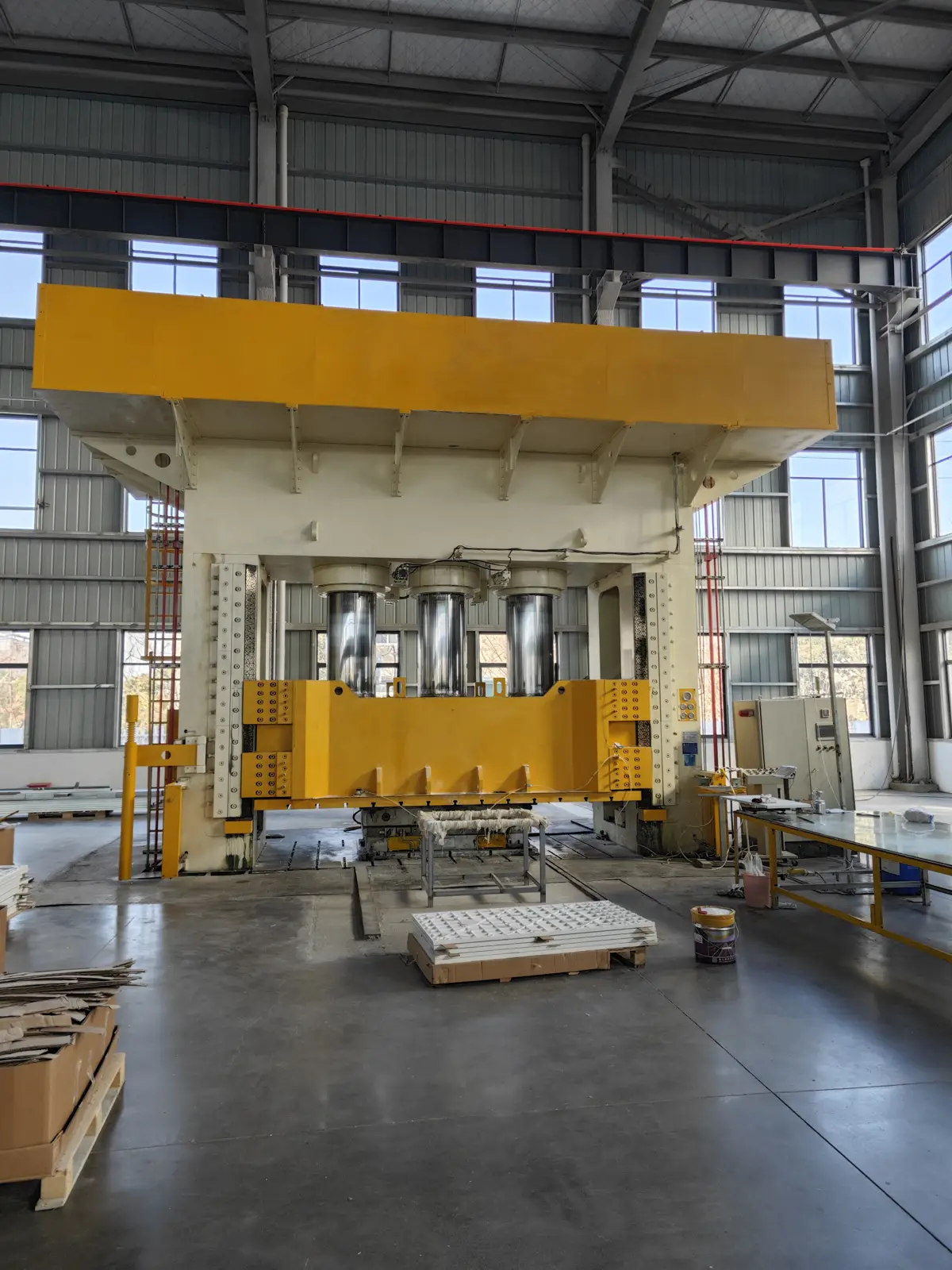
Ask for a live call and ask the person filming to walk, not present. The route that proves a factory: start at the raw material and mould storage, move to the presses — SMC pans are compression-moulded under heat and pressure, so presses sized for pan moulds should be working or clearly set up for it — then along finishing, inspection and packing, ending at finished stock of the product type you are buying. Ask them to open a mould, show the underside structure of a finished pan, and read a model label on a packed unit. None of this can be staged in an office, and a real factory is used to the request. Record the call with permission, and keep it with the documents from the checks above: together they form the verification file you will want when a second person in your company asks why you chose this supplier.
How does SMC Shower itself stand up to this checklist?
Run us through the same five checks — that is what they are for. Our position is stated plainly: SMC Shower is the US wholesale channel of Homietek New Material Technology Co., Ltd. All products are manufactured in our own moulding facilities in China. You can read more about who makes the pans and how we work on our About page, and the checks above — drawings, loading data, certifications, factory video, shipment records — are the same evidence we expect to be asked for before a first order.
Frequently asked questions
Is a business licence enough to prove a supplier is a factory?
No. A licence proves a company exists; it does not prove the company moulds pans. Trading companies hold licences too. Factory proof is production evidence: presses and moulds on video, model drawings with revision control, loading records and staff who can answer production questions without relaying them elsewhere.
The supplier’s prices are the lowest I have found. Does verification still matter?
It matters more, not less. A low quote from an unverified supplier often means you are not comparing the same thing — a different model variant, thinner packing, or a middleman who will source from the cheapest available mould that month, so the second shipment does not match the first. Verification is what makes two quotes comparable.
What if a supplier refuses to share drawings before an order?
Ask what they will share: a dimensioned drawing with proprietary details redacted is a reasonable compromise, and most factories accept it. A supplier who will share nothing dimensioned before payment is asking you to rough in plumbing and commit warehouse space on trust — price that risk accordingly, or walk away.
How often should I re-verify an existing supplier?
Re-run the document checks whenever models, moulds or the contracting company change, and spot-check production evidence periodically on continuing programmes. Verification is a file you keep current, not a ceremony you perform once.
Ready to run the checklist on us? Request a quote and list the evidence you want with your first order.