
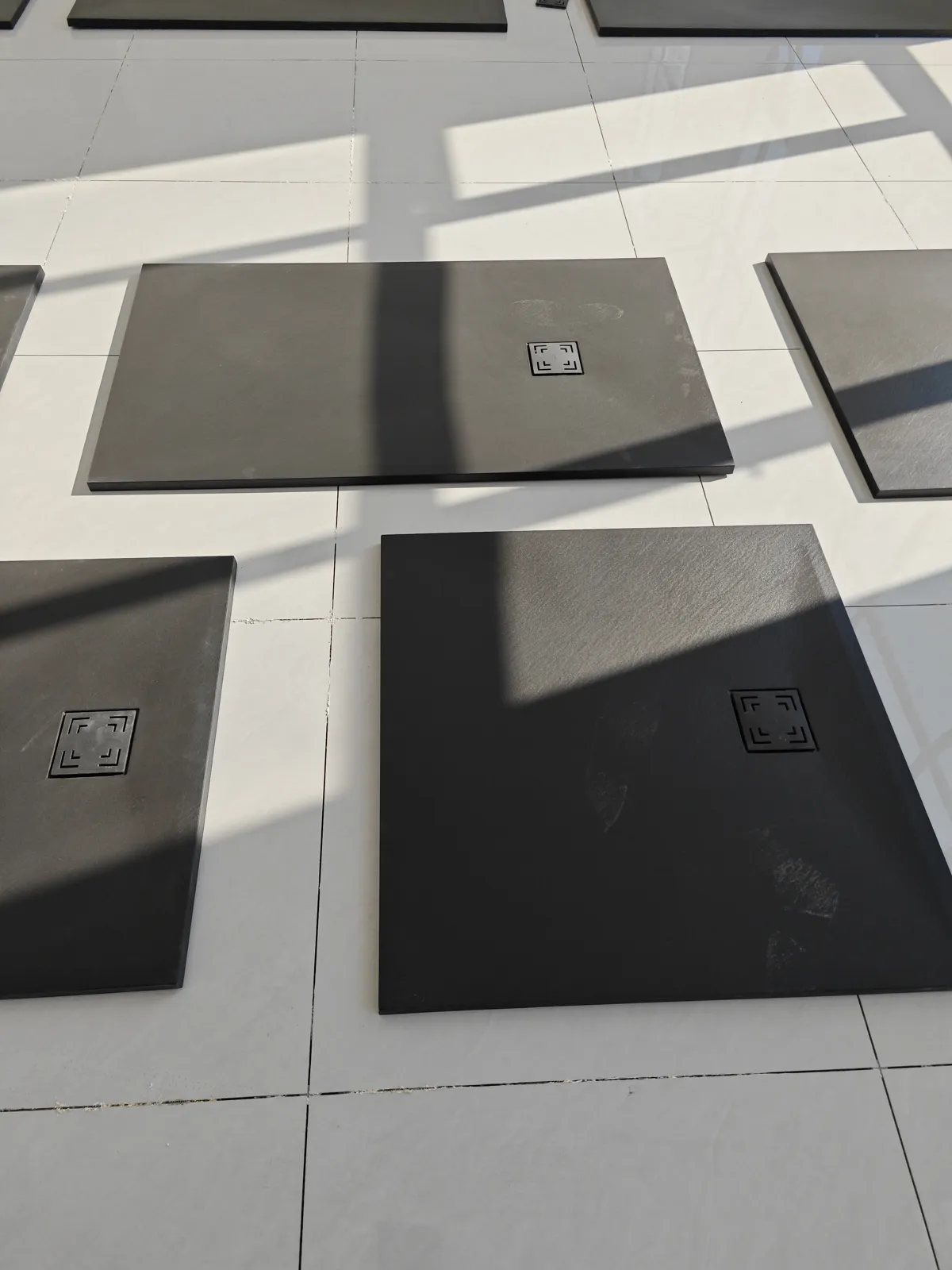
For hotel projects, the right shower pan is the one that survives repetition: the same room detail installed identically across a whole property, maintained by a housekeeping team, and repaired years later from a spare that still matches. SMC shower pans suit that brief because they are compression-moulded — every unit of a model comes off the same mould with the same dimensions, the same drain position and the same surface — and because low-profile formats, including 26 mm profiles, give the contemporary, low-step bathroom look hotel designers specify without a wet-room build-up in every room. This guide organises the specification the way project buyers actually work: by room type first, then batch consistency, then the spare-unit plan most projects forget.
By the SMC Shower Engineering Team · Last updated: November 2026
Which pan format fits which hotel room type?
Hotels do not have one bathroom; they have a schedule of bathrooms, and each type pushes the specification differently. Standard guest rooms reward speed and repeatability: a moulded pan with an integrated tiling edge installs faster and more consistently than a built-up tray, and the same detail repeats floor after floor. Accessible rooms turn on the threshold: a low-profile pan, recessed as described in our installation guidance, keeps the step minimal while retaining a defined shower area that contains water better than a fully open floor. Suites and premium rooms are where finish matters most — matte, slate-effect SMC surfaces give the stone-look brief without stone weight on upper floors. Back-of-house and staff facilities need the opposite end of the range: the most robust, simplest format, easy to clean and easy to replace. If you are new to the material itself, start with what an SMC shower pan is and then return to this schedule.
| Room type | Specification priority | What to confirm before ordering |
|---|---|---|
| Standard guest rooms | Repeatability and install speed across many identical rooms | One model and drain variant for the whole room type; drain position confirmed on the model drawing |
| Accessible rooms | Lowest practical threshold and reliable water containment | Low-profile format, recessed installation detail, threshold and drainage behaviour agreed with the design team |
| Suites and premium rooms | Finish and feel underfoot, including verified anti-slip performance | Surface finish sample approved in person; anti-slip Class C (DIN 51097) documentation for the specified finish |
| Family and long-stay rooms | Durability under heavier, longer use | Surface care instructions the operator can actually follow; spare availability for high-wear rooms |
| Staff and back-of-house | Robustness and simple replacement | Same model family as guest rooms where possible, so spares and fittings stay common |
How do I keep hundreds of pans identical across a project?
Batch consistency is a specification task, not a hope. Moulded production is inherently repeatable — the mould fixes dimensions and drain position — but colour and finish are batch-sensitive in any pigmented material, and large projects are rarely produced in a single run. Protect the project four ways. First, approve a physical sample and keep it: every later delivery is judged against the retained sample, not against memory or a photograph. Second, fix the model code, drain variant and finish in the order documents, and require notification before any mould or material change mid-project. Third, schedule deliveries so each floor or block draws from one production batch where possible, keeping any slight batch variation inside one area rather than striped across adjacent rooms. Fourth, inspect deliveries with the receiving routine in our shipping damage and inspection guide — consistency checks belong in the same dock inspection as damage checks, while the evidence is fresh.
How many spare pans should a hotel project hold?
Plan spares as a line in the original order, not as a scramble in year three. The right quantity is a project decision — it depends on room count, how standardised the room types are, and how long the operator intends to hold the room design — so agree it with the supplier before production, while the mould and the batch are current. Spares earn their storage space in three situations: installation damage discovered late, in-service damage in a high-use room, and the phased refurbishment that always comes, where a matching pan keeps a room in inventory instead of triggering a full bathroom refit. Store spares flat, in their packing, with the model code and batch reference recorded — an unlabelled spare is a guess, not a spare. Include drain covers and waste fittings in the spare plan; small parts are what actually go missing.
What should the operator ask about cleaning and maintenance?
Housekeeping reality decides whether a specified pan still looks right in year five. Before committing, get the care instructions for the exact surface finish and test them against the chemicals the operator already uses — a finish that needs special products will simply be cleaned with the standard ones, and the result will be blamed on the pan. Moulded SMC surfaces are non-porous and clean without sealing, which is one reason the material suits hotels, but abrasive pads and aggressive descalers are hard on any bathroom surface. Agree the care sheet at specification stage, hand it to the operator at handover, and keep it with the project documents alongside the spare-unit record. For a broader view of how hotel bathroom programmes are structured, see the hotel bathrooms overview on our main site: hotel bathroom solutions.
Frequently asked questions
Are SMC pans suitable for accessible hotel bathrooms?
Yes, in low-profile formats. A 26 mm profile pan can be recessed so the threshold finishes close to floor level, keeping a defined, well-drained shower area. Confirm the threshold detail, drainage and local accessibility code requirements with your design team for the specific rooms.
How do I make sure replacement pans match years later?
Hold project spares from the original production, labelled with model code and batch, and keep the approved physical sample. A moulded model’s dimensions and drain position stay stable because they come from the mould; colour and finish are what spares protect you against.
Should every room type use the same pan model?
Standardise as far as the room schedule honestly allows. Fewer models mean simpler rough-in, common fittings, one spare pool and faster installation. Accessible and premium rooms may justify their own formats — standardise within each room type instead.
What anti-slip performance should I specify for hotel pans?
Specify verified barefoot slip resistance for the exact surface finish, and ask for the test documentation. Anti-slip Class C (DIN 51097) is the highest class under that standard and is the level associated with the pans covered on this site; confirm the documentation names the finish you are ordering.
Working on a hotel programme and need model drawings and batch planning for your room schedule? Request a quote and include the room types and counts.